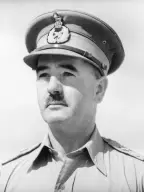
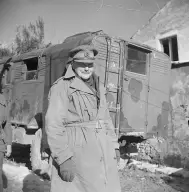
Lieutenant-Colonel , aged 44, commands the New Zealand on Crete. Awarded the in 1917 for an action at La Basseville, near , he has been given the most exposed task in Brigadier 's 5th Brigade: holding Hill 107, the height that overlooks airfield at the western end of the island.
On 20 May 1941, the German airborne assault falls on the airfield. Under bombing and strafing, lightly wounded, Andrew sees paratroopers landing near his headquarters and loses contact with his forward companies. He asks for support from the neighbouring 23rd Battalion; Hargest refuses it.
Late in the day, Andrew commits his reserve, backed by 2 Matilda tanks: the attack fails. He warns Hargest that he may have to give up Hill 107 and receives only this reply: "If you must, you must." Reinforcement companies are nevertheless announced by brigade.
During the night of 20 to 21 May, Andrew, who does not know that his forward companies are still holding, must decide: hold the height at all costs to deny the runway to German aircraft; go back on the attack in the dark with the promised reinforcements; or pull back to preserve the battalion and form a new line further to the rear.
Andrew pulled back to preserve the battalion: during the night, he withdrew from Hill 107 the units he could reach. His forward companies, in fact almost intact, found that they had been left on their own and fell back in turn. On the morning of 21 May, the Germans occupied the height unopposed and could from then on land transport aircraft at despite the fire: a steady stream of reinforcements from the turned the battle. Hargest, surprised by the withdrawal, launched no immediate counter-offensive; the one that went in on the night of 21 to 22 May failed. The loss of , through broken communications and a decision taken in the fog of war, turned a German disaster into victory, and Crete was evacuated at the end of May. How far the blame lies with Andrew or with Hargest is still debated by New Zealand historians.
T07-023