On the morning of 14 May 1940, the situation in Rotterdam is confused. The German troops of General 's XXXIX Motorised Corps, including the , hold the south of the city, in the Charlois-Feijenoord sector, while the Dutch under Colonel hold the north, that is, the historic centre. Around 10:30, a German ultimatum is delivered to Scharroo: surrender or bombardment.
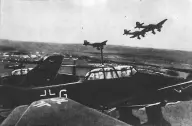
In the early afternoon, talks are under way. But Oberst 's "Totenkopf", some 90 He 111 bombers that took off from bases in north-western Germany, is already flying towards Rotterdam for an attack prepared since the day before within 's Luftwaffe. The crews are unaware that talks are taking place on the ground.
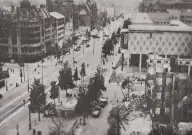
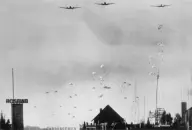
Shortly before 13:30, the 2 formations reach the city. From the ground, red flares now go up, the agreed signal to call off the attack. The formation coming from the south, 36 aircraft, sees them and mostly turns back. The 54 He 111s of the formation coming from the north-east do not see them and drop 1,308 bombs, about 97 tons, on the historic centre.
The question that has been put to the historiography remains: was that confusion avoidable? Could Lackner have stopped the bombing in time?
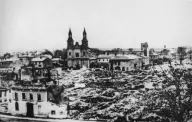
The consensus historiography points to structural organisational confusion, with an element of intent. The bombardment destroys 2.6 km² of central Rotterdam: 24,978 buildings destroyed, 78,000 made homeless, between 650 and 900 civilian dead according to estimates (figures long over-estimated at 30,000 by Allied propaganda). Scharroo capitulates in the afternoon, and that same evening General announces the capitulation of the Netherlands to spare other Dutch cities; it is signed on 15 May at Rijsoord. Rotterdam remains the archetype of the deliberate urban bombing of civilians: British leaders will invoke it as a precedent to justify retaliation on German cities (Hamburg 1943, Dresden 1945), and it will be invoked on the German side for the Blitz on London (September 1940). After the war, Göring and defended the bombing on the grounds that Rotterdam was not an open city. The reconstruction of Rotterdam becomes a major post-war urban project; the city is today a recognised model of modern architecture.
T03-021