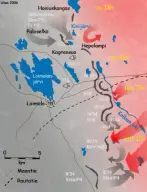
By 7 December 1939 the Soviet under Colonel — 17,000 men, 48 T-26 and BT-7 tanks, 80 guns — has crossed from the east into the Suomussalmi sector (the forested zone north of Kuhmo), with the strategic mission of reaching Oulu on the Gulf of Bothnia and cutting Finland in 2.
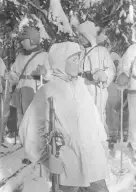
On the Finnish side: Colonel , 47, has only just taken command of the new — a hastily formed unit built around the and the , some 11,500 poorly equipped men trained in winter combat on skis. The has no armour and no heavy artillery.
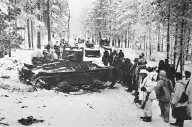
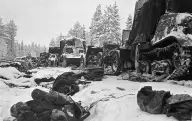
From 7 to 22 December the 163rd Division advances as a motorised column up the narrow Suomussalmi-Hyrynsalmi forest road. The extreme cold (-40°C at night) immobilises the Soviet vehicles, and the camp fires become perfect targets for the Finnish patrols. Siilasvuo must decide how to weight the attack during the second half of December: to mass his whole division on the centre of the column to break the command, to multiply simultaneous and dispersed assaults to shatter Soviet cohesion, or to lock down the tail of the column on the Raate road to bar the arrival of reinforcements.
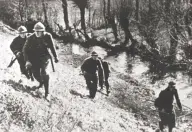
Siilasvuo applies an extended motti doctrine through simultaneous dispersed attacks: let the Soviet column drive in deep, then send light ski battalions to cut the road at several points, isolating the division into pockets of 200 to 500 men. From 23 to 30 December 1939 the Finnish forces systematically destroy the 163rd Division through night attacks: 27 distinct mottis are identified, the largest (3,200 men) at the village of Hulkonniemi. Zelentsov, encircled, tries to break out on 24 and 25 December, in vain; on 28 December the division's resistance collapses and its remnants stream back across the ice of Lake Kiantajärvi towards Juntusranta. Toll on 30 December 1939: 7,500 Soviet dead, 3,500 prisoners, 5,000 missing in the forest (most of them frozen to death), 27 tanks destroyed, 75 guns captured. The 163rd Division is shattered. Zelentsov himself survives the disaster: in June 1940 he takes over the 88th Rifle Division, and he will be killed in a German air attack on 15 August 1941. On 31 December Siilasvuo swings his division south-east to intercept the . Suomussalmi is celebrated as a military miracle — Finnish losses are 900 killed and 1,770 wounded, a ratio of 1 to 8. Siilasvuo is promoted brigadier general on 1 January 1940. He went on to command during the Continuation War (1941-1944). Died in 1947 aged 54.
T02-006