After the capitulation, a few thousand Belgian servicemen and volunteers reached Great Britain, by way of France, Spain or the sea. There, in camps (notably in Wales), the question of organisation arises: what to do with these scattered men, in a country preparing to face Germany alone?
For these servicemen, the issue is to reconstitute a Belgian fighting force. To organise into autonomous Belgian units, under the authority of the London government, in order to continue the war under their own colours. To integrate directly into the British forces (RAF, Royal Navy), which is quicker but at the cost of national identity. Or to wait for sufficient manpower and resources before forming a genuine army.
The challenge is real: limited numbers, equipment to be found, a status to be negotiated with the British, and a Belgian government in exile whose authority is contested by the "Royal Question". But the symbolic stakes are major: to show that Belgium continues the fight, and to prepare the Belgian contribution to the liberation.
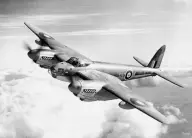
The Belgians choose to reconstitute national units under the authority of the London government: from the summer of 1940, the Belgian Forces in Great Britain are organised around the camp at Tenby, in Wales. Lacking Belgian aircraft and ships, airmen and sailors at first serve as individuals in the RAF and the Royal Navy, before Belgian squadrons are created within the RAF from late 1941. The land units will give rise to the (), which will land in Normandy in August 1944 and take part in the liberation of Belgium. Modest at the outset, these forces embody the continuity of the Belgian fight alongside the Allies and prepare the country's contribution to its own liberation. Their founding, in the summer of 1940, is the military act of free Belgium.
T04-136