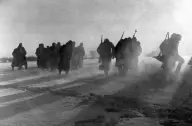
receives the Eastern Front reports with blunt arithmetic: the Soviet winter counteroffensive has just snapped shut around General 's II Army Corps, trapping roughly 100,000 men in the pocket, south of Lake Ilmen. Ground supply lines are severed, temperatures plunge below minus 30 degrees Celsius, and stocks of ammunition, fuel and food are dwindling by the hour.
Hitler took this risk knowingly. On 12 January Field Marshal , commanding Army Group North, had proposed pulling the troops back behind the Lovat River before the trap closed. Hitler refused and ordered held at all costs; Leeb asked to be relieved and was replaced by .
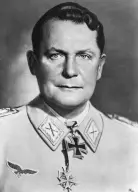
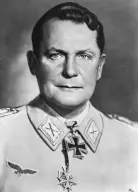
The now says it could deliver about 300 tonnes a day to the pocket. But the Junkers transports are few, exposed to Soviet fighters and snowstorms, and no airlift on this scale has ever been attempted.
Hitler must decide: order the whole pocket held and supplied by air while awaiting a relief offensive; authorise an immediate westward breakout to the Lovat, sacrificing the heavy equipment to save the men; or give up the eastern part of the pocket to hold a shorter perimeter, easier to defend and to supply.
Hitler ordered the whole pocket held. From 19 February the 's transports, coordinated by Colonel , landed or dropped their loads day after day: by May they had delivered some 24,300 tonnes of supplies and more than 15,000 replacements and flown out more than 22,000 wounded, at a cost of 265 aircraft, 106 of them Ju 52s. On 20 March General 's battle group launched the relief operation Brückenschlag; it linked up with the besieged troops at Ramushevo on the Lovat around 21 April. was evacuated only in February 1943. This qualified success convinced Hitler that a large airlift could save an encircled army, a precedent he invoked a few months later to condemn the 6th Army at , where the failed catastrophically.
T10-033