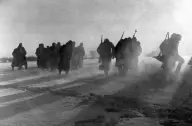
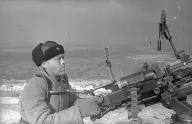
summoned his generals to the on 5 January 1942 with a conviction that brooked no argument: the counter-offensive launched in December had pushed the back 150 to 200 kilometres from Moscow, and that momentum had to be exploited without delay. The was, in his view, on the verge of collapse along the entire Eastern Front, from in the north to Crimea in the south, and the moment called for a killing blow, not caution.
, who had just directed the defence of Moscow, took the floor and challenged that picture. Soviet reserves were thin, divisions exhausted, supply lines stretched to breaking point. Rather than scattering available forces across 1,500 kilometres of front, it made far more sense to concentrate all reserves against Army Group Centre alone, still reeling and vulnerable at the heart of the German line. Other voices proposed a third course: consolidate the gains of December, rebuild reserves in men and equipment throughout the winter, and launch a major offensive only once the was genuinely ready.
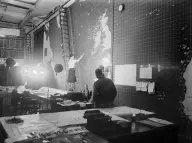
Stalin had to choose between these 3 paths: unleash a general offensive on every front at once, from to the Crimea, to crush the before it recovered; follow Zhukov and concentrate the reserves against Army Group Centre alone; or consolidate the December gains and rebuild his forces before any new offensive. At stake: shortening the war by an entire season, or squandering the momentum of the victory before Moscow.
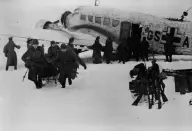
Stalin imposed the general offensive. Spread across hundreds of kilometres, Soviet armies wore themselves out without achieving any decisive breakthrough. The German pocket held and was resupplied by airlift. The salient driven near became the springboard for the May 1942 offensive, which turned to disaster; further north, the 2nd Shock Army, pushed towards Lyuban on the Volkhov front, was encircled and destroyed in June 1942. The precious winter reserves were squandered; Zhukov would write after the war that January 1942 had been the missed opportunity to finish Army Group Centre and change the course of the war.
T10-026