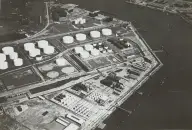
The Dutch East Indies are one of Asia's largest oil suppliers: Sumatra, Borneo and their refineries feed a decisive share of the regional market. For a Japan thirsting for fuel, these fields are a prime target.
In 1939, tensions are rising. If invasion comes, the issue is no longer to defend the wells, which are militarily untenable, but to decide their fate.
Should everything be destroyed to deny the invader this resource, should the installations be preserved in the hope of recovering them intact, or should the most valuable equipment be discreetly dispersed?
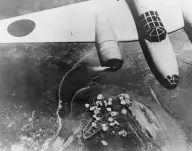
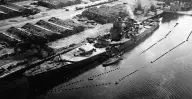
The Dutch authorities opted for sabotage. During the Japanese advance in early 1942, the fields and refineries (Tarakan, Balikpapan, Palembang) were set ablaze and destroyed. The destruction was only partial, however: with the help of thousands of technicians sent from Japan, production restarted by the end of 1942 and in 1943 reached about 90% of its 1938 level.




T00-075