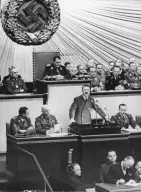
is due to speak on 30 January 1940 at the in Berlin, the regime's great rally hall, for the seventh anniversary of his appointment as chancellor. The speech will be broadcast by radio across the Reich and listened to abroad.
The situation is uncertain. Poland was crushed in September, but London and Paris rejected his peace offer of 6 October 1939. In the West it is the Phoney War: the planned offensive, , has just been postponed again after the incident, when attack plans fell into Belgian hands on 10 January. The winter is harsh, coal is short and rationing weighs on Germans, who did not greet the war with enthusiasm.
The USSR, bound to the Reich by the German-Soviet pact, is bogged down in Finland. In the United States, cash and carry opens American arsenals to the Allies. Hitler must reassure an anxious people, impress the Allies and the neutrals, and reveal nothing of his plans.
He can strike a triumphant tone, celebrating the crushing of Poland; an accusing tone, blaming the war on Britain and France and promising them the fight; or a messianic tone, presenting himself as the leader chosen by Providence.
Hitler chooses accusation. For more than an hour he portrays Britain and France as the instigators of a war they wanted and will now get. He mocks the divine mission Britain supposedly claims, having subjugated some 40 million square kilometres in 300 years, and attacks and . Poland, he says, was swept away in 18 days without the British guarantee saving it; he praises the understanding with Moscow and invokes Providence, but these themes serve the indictment. He concludes: “Germany will live, and therefore Germany will win”, vowing never to capitulate. The published text of the speech does not mention the Jews and does not repeat the “prophecy” of 30 January 1939 about the annihilation of Europe's Jews: Hitler repeats it in public only from 30 January 1941, in the same , wrongly dating it to 1 September 1939, and then invokes it several times at the height of the .
T02-072