By the spring of 1939, has already absorbed Austria, dismembered Czechoslovakia and wrested Memel from Lithuania. These bloodless coups have strengthened his faith in his own daring. But Poland, backed since 31 March by a British guarantee, refuses to give up .
Hitler has had a riposte prepared. On 3 April, the OKW circulated the “” directive: the Wehrmacht must be ready to attack Poland at any time from 1 September 1939. But a plan is not a decision, and its use remains to be settled.
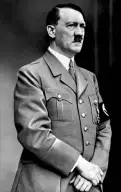
On 23 May 1939, the day after the Pact of Steel was signed with Italy, Hitler gathers , , , , and other military chiefs in his study at the Chancellery; his aide-de-camp keeps the record. The great unknown remains the Western powers. An attack on Poland risks triggering a general war that Germany is not sure of winning on 2 fronts.
Before them, Hitler must set the course: announce his resolve to attack Poland at the first suitable opportunity, betting on its isolation and on Western passivity; hold to diplomatic pressure to obtain without war; or temporise for a year, long enough to complete rearmament.
Hitler tells his generals he is resolved to attack Poland “at the first suitable opportunity”. , he says, is not the real object: the aim is to expand “living space” in the East and secure the Reich's food supply. He rules out a repeat of the Czech scenario — there will be fighting — and intends to isolate Warsaw from its allies. Preparations for “” go ahead on that basis. Hitler bets that France and Britain, as at Munich, will back down or fail to act in time. This wager on Western passivity, and the search for a deal with the USSR to avoid a second front, shape all of German diplomacy in the summer of 1939, up to the German-Soviet pact of 23 August and the invasion of Poland on 1 September. Schmundt's record would be produced at the Nuremberg trial as evidence that the war was premeditated.
T00-011