, British Minister of Health, is in charge of an unprecedented operation: moving children and the most vulnerable out of the big cities, which are threatened by German bombers. On 31 August 1939, as Germany prepares to invade Poland, the government puts the plan into action; departures begin the next day, under the name .
The scheme has been in preparation since 1938, on the recommendation of a committee chaired by Sir . On a voluntary basis, it targets 4 priority groups: schoolchildren, who leave class by class with their teachers, mothers with children under 5, expectant mothers and disabled people. Each child wears a name label and carries a gas mask and a few provisions.
The evacuees still have to be housed. The ministry has had the available accommodation in the reception areas surveyed, and the of July 1939 allows billeting to be imposed on householders. But not every country household is willing, and the arrival of hundreds of thousands of children from poor districts causes unease.
Elliot must set the rule for reception: billet the evacuees in private homes, imposing them on reluctant households if need be; group them in collective centres, schools, village halls and camps; or rely on volunteer families alone, even if it means sending back to town those left without a roof.
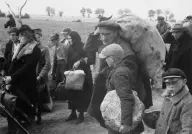
Elliot holds to billeting in private homes, which local authorities can impose under powers delegated by the minister; only a few camps, built under the Camps Act of 1939, take in groups. From 1 to 4 September, nearly 1.5 million people leave the cities of England, including 826,950 unaccompanied schoolchildren, 523,670 mothers with young children and 12,705 expectant mothers. On the ground, the sharing-out is often improvised: in village halls, host families pick their lodgers themselves, and the last children are placed door to door. The encounter between children from working-class districts and rural households causes a social shock, documented notably by the surveys. With the feared bombing failing to come, many go home: by February 1940, 87% of the mothers and 44% of the evacuated children have returned. New waves of evacuation follow in 1940, after the fall of France and then with the Blitz. The also sends children overseas, until the sinking of the on 17 September 1940 ends the programme.





T01-075