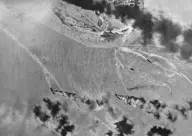
, Prime Minister of Sweden, had led a national unity government since December 1939, with at Foreign Affairs, committed to strict neutrality despite the immense sympathy of Swedes for Finland, under attack by the USSR. On 21 February 1940, at about 12:40, 7 Soviet bombers flew over Pajala, a Swedish village in Norrbotten close to the Finnish border.
The aircraft dropped some 150 bombs, high-explosive and incendiary. 6 buildings caught fire, a sawmill was destroyed, the cemetery was partly wrecked, the church windows were shattered and the telephone line to the south was cut. The human toll was light: 2 injured, no dead. On the way back towards Murmansk one of the bombers, out of fuel, came down in Finland, where its crew was captured.
The incident put Stockholm before a delicate choice. Sweden wanted to stay out of the war, yet could not leave an attack on its own soil unanswered. The Hansson government could send Moscow a measured note of protest and wait for explanations; handle the affair quietly, bilaterally, so as not to inflame opinion; or firmly demand apologies, reparations and guarantees, at the risk of escalation with the USSR.
The Hansson government chose the moderate diplomatic note: a formal protest was handed to the Soviet Union the same day, with no threat and no break in relations. Moscow began by denying everything: the agency called the reports a "malicious fabrication" and claimed that no Soviet aircraft had flown over Sweden. On 6 March 1940 the Soviets finally admitted that aircraft which had lost their way had dropped the bombs, the only Soviet bombing of Sweden during the war to be acknowledged in this way. After some bargaining, Stockholm, which had claimed 49,000 kronor, obtained 40,000 kronor in compensation. The crisis was defused without Sweden giving up its neutrality, a few days before the Moscow Peace of 12 March 1940 ended the Winter War.
T02-040