During the exodus, the Loire bridges between Orléans and Nantes become bottlenecks: nearly 2 million people are trying to cross the river to reach the south, forming queues tens of kilometres long. The Loire is the last great natural barrier before the zone the army still hopes to hold.
The French engineer sappers receive contradictory orders. Military doctrine calls for destroying the bridges to slow the Wehrmacht pressing on the heels of the refugee columns. But those same bridges are covered with civilians in flight, and coordination between the overwhelmed staff and the units on the ground has collapsed.
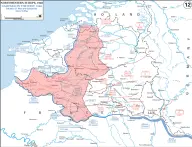
From 16 to 18 June, several engineer officers find themselves alone on a bridge full of people, with a primed charge and orders to destroy, while the enemy approaches. The memory of Rotterdam, bombed on 14 May, and the dread of the Stukas, make every hour of waiting agonizing for the columns massed on the banks. This impossible decision arises at many points along the river.
The sappers for the most part carried out the demolition order: at Orléans, Châteauneuf, Gennes or Montsoreau, the bridges were blown between 16 and 20 June as the enemy approached. Several bridges were blown while civilians were still on them; the exact number of victims remains unknown, the most cited case being near Amboise. These tragedies, long passed over in silence, illustrate the total disorganization of French command in June 1940, when the military logic of delay and the human tide of the exodus collided. No overall official recognition followed, and the memory of these episodes has remained local and fragmentary.




T04-019