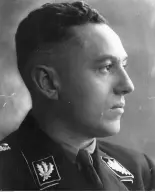
On 28 May 1940, as the Dunkirk evacuation began, the () under was pushing through northern France to cut off the British retreat. Its 2nd Battalion, commanded by SS-Hauptsturmführer , 29, and including the 7th company, attacked the Wormhoudt sector.
The SS ran into fierce resistance from the 2nd Battalion of the (BEF), supported by other British units and a few French soldiers. The fighting cost the dearly: himself was pinned down for a time in a ditch under British fire.
Out of ammunition, the defenders eventually surrendered. Several dozen prisoners, mostly Warwickshires, Cheshires and gunners, were marched to a barn at La Plaine au Bois, near Esquelbecq, and packed inside.
The question the postwar investigations would ask: what happened in that barn?
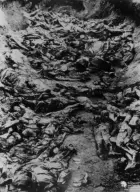
The SS summarily executed the prisoners. They threw grenades into the barn, took groups out to be shot, then opened fire on those who remained. About 80 men were killed. Only a handful survived, among them 2 soldiers left for dead and found 2 days later by Wehrmacht medics. It was one of the first documented SS massacres of Western prisoners. Mohnke continued his career in the SS: he commanded the 1st SS Panzer Division Leibstandarte from August 1944 to February 1945, then the Berlin government quarter in April-May 1945. Captured by the Soviets in May 1945, he spent 10 years as a prisoner and was released in 1955. He was never tried for Wormhoudt: the British inquiry of 1947 did not lead to a prosecution, and the reopening of the case in 1988 ran up against insufficient evidence in Germany. Mohnke always denied responsibility. He died in 2001 aged 90. A memorial was inaugurated at Wormhoudt in 1973; the barn has been rebuilt as a replica, and a small memorial museum exists at Esquelbecq. Wormhoudt prefigured the SS massacres of the following years (Boves, Oradour-sur-Glane, Malmedy).
T03-033