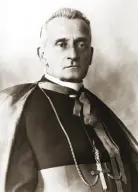
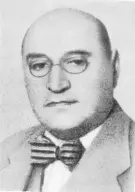
Bishop , 64, had been bishop of Katowice since 1930, heading a Polish Upper Silesian diocese, an industrial region 65% Polish and 35% German. On 4 September 1939, Upper Silesia was annexed to the Reich and attached to the Reichsgau Schlesien, renamed Oberschlesien in 1941. Adamski refused to flee.
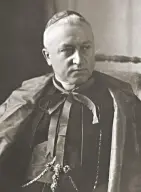
The occupation authorities imposed German as the sole liturgical language, hunted the Polish clergy and placed the diocese under mounting pressure. This line set Adamski directly against the Gauleiter of Silesia, , and his deputy , who would succeed him in 1941, and against the far more accommodating stance of Cardinal , Archbishop of the neighbouring diocese of Breslau. Many Polish priests faced arrest, converts from Judaism were in danger, and the parish schools risked closure.
From 1 September 1939 to 29 February 1940, Adamski was summoned 6 times by the Gestapo. Each time, he refused to sign any pledge of cooperation. A bishop could strike hard and fast with a public gesture, or hold on in the shadows to last.
Adamski had to decide whether to make his resistance public.
Adamski chose a discreet and steady pastoral resistance through deeds, to preserve the long term. For nearly 18 months he preserved the Polish liturgy and preached in Polish despite German orders, sheltered the threatened priests, discreetly helped Polish Jews converted to Catholicism and kept the parish schools running in Polish. But on 28 February 1941, on a Gestapo order, he had to leave his diocese and was expelled to the Generalgouvernement. He spent the rest of the war in the Warsaw area, where he was still ministering during the 1944 Uprising, then returned to Katowice in 1945 and resumed his episcopal duties. But the postwar Polish communist regime regarded him as too independent. In 1952 the communist authorities removed him from his diocese; he was only allowed back on 5 November 1956, during the October Thaw, and died in Katowice in 1967. His record remains debated, because he had encouraged Silesians to sign the Volksliste, which the communist authorities held against him in 1952. His strategy is studied in pastoral theology as a model of pastoral resistance under occupation.
T02-062