On 1 September 1939 the Bank of Poland has to put nearly 80 tonnes of gold out of harm's way, in ingots and coin, the bulk of the Polish state's reserves. To lose it would be to bankrupt any future government-in-exile.
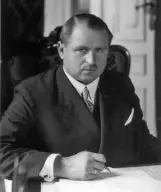
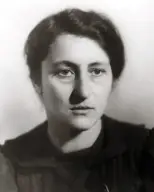
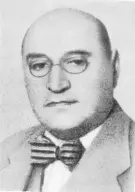
On the night of 4-5 September 1939 the Warsaw vaults are emptied under the bombs, and the gold heads east under the direction of Colonel . , 47, a former Minister of Finance (1929-1931) turned political writer, runs the operation with Major Henryk . His wife, , Poland's first Olympic champion (gold in the discus at Amsterdam in 1928), is one of the crew of the convoy of requisitioned buses and trucks carrying more than 1,200 crates of gold.
Gathered at Luck on 8 September, the gold reaches Sniatyn, on the Romanian border, on 12 September, evading the Luftwaffe. On the evening of the 13th it is loaded onto trains that reach Constanta, on the Black Sea, on 15 September. There the British consul has requisitioned the tanker Eocene, flying the British flag, to take the cargo on board.
Matuszewski, who has taken charge of the convoy beyond the border, must decide on its destination.
Matuszewski heads for France, the principal ally, to deposit the gold with the Banque de France. The Eocene leaves Constanta and anchors at Istanbul on 16 September; with the agreement of the Turkish authorities, the gold is transferred to a special train that crosses Turkey by way of Ankara, enters Syria and reaches Beirut, under French control, around 23 September. There the cargo is divided between the cruiser Émile Bertin and 2 French destroyers, which land it at Toulon. By 5 October 1939 the gold lies in the vaults of the Banque de France at Nevers, in a strongbox rented by the Poles, under the authority of the government-in-exile. In June 1940, as France's defeat looms, it is shipped from Lorient on the cruiser Victor Schœlcher, reaches Casablanca and then Dakar, and ends up under Vichy control at the fort of Kayes, some 800 kilometres inland. The Poles only recover it in January 1944, with a shortfall of more than 10 per cent that is never explained; the gold is then divided between New York, Ottawa and London. Matuszewski dies in New York in August 1946, Konopacka in Florida in 1989. The evacuation of the Polish gold remains one of the most audacious logistical operations of the war.
T01-040