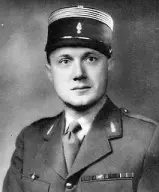
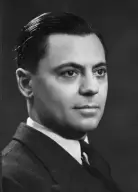
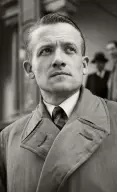
, 40, is a Catholic and Christian-democrat activist based in Brive-la-Gaillarde, in the Corrèze. A father, a leader of local Christian social action, he has been listening to British radio since the start of June. On 17 June he hears Pétain ask to "cease the fighting" and is shaken.
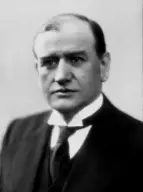
That same day Michelet decides to act, even before anything is organized. He types up some 50 leaflets quoting lines from — "In wartime, the man who does not surrender is my man, whoever he is, wherever he comes from" — and calling for refusal of the armistice. At night he slips them into letterboxes in the centre of Brive.
This isolated gesture, made the day before de Gaulle's Appeal from London, is one of the very first acts of civil resistance on metropolitan soil. The question for Michelet is how to carry on: alone and discreet, building a network, or going to ground until the situation clarifies.
Michelet carries on alone in Brive — regular leaflets and cautious one-by-one recruitment —, then gradually broadens his action. He continues the leaflets in Brive and slowly weaves the ties that will lead him to head the Combat movement in the Limoges region (R5). Arrested in Brive on 25 February 1943, he is deported to Dachau, from which he returns. A Companion of the Liberation, he will be a minister several times under the Fourth and Fifth Republics, notably Keeper of the Seals in 1959. His leaflet of 17 June 1940 at Brive is often cited as the first written call to resistance distributed in metropolitan France, predating de Gaulle's Appeal by a day.
T04-028