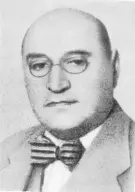
, 57, a former schoolteacher, has chaired since 1929 the organisation, the women's auxiliary of the Finnish Civil Guard, independent since 9 September 1920. Its name comes from a heroine of The Tales of Ensign Stål by (1848), a soldier's wife who followed the army to nurse the wounded.
On 30 November 1939 the attacks Finland. The lottas mobilise at once: they nurse the wounded in hospitals, feed the troops and the population, man air-raid observation posts on church towers, survey towers and ski jumps, and handle signals and office work. By taking over these tasks they free some 100,000 men for the front.
One principle has governed the organisation since its creation: lottas serve unarmed. The war puts it to the test. Observers at isolated posts, nurses in hospitals near the front and cooks in the canteens share the soldiers' risks under the bombs, and Finland, with 3.7 million inhabitants facing the USSR, is short of men.
Luukkonen must set the line: keep the service unarmed, even if it leaves women defenceless; allow, case by case, the arming of the most exposed lottas, in anti-aircraft units or at observation posts; or open combat to volunteers.
Luukkonen keeps the service unarmed: throughout the Winter War the lottas remain auxiliaries, at the front as in the rear. 63 lottas die during the conflict. In June 1940 awards Luukkonen the Cross of Liberty, 1st class with swords; she is the first woman to receive it. During the Continuation War the organisation grows to more than 230,000 members and the rule holds, with a single exception: in 1944 volunteer lottas operate the searchlights of an anti-aircraft battery in , the , the only armed women's unit in Finnish military history. At the armistice of September 1944, Moscow demands the dissolution of organisations it deems fascist; is dissolved on 23 November 1944. Luukkonen, sidelined and showered with anonymous letters, dies of a heart attack on 27 October 1947.
T02-013