, 40, is a reserve lieutenant colonel — one of the highest military ranks held by a woman in interwar Poland. A veteran of the defence of Lwów in 1918 (where, at 19, she fought with the , the "Lwów Eaglets") and of the Polish-Soviet War of 1920. Since 1928 she has headed the Przysposobienie Wojskowe Kobiet (PWK, Women's Military Training) — a paramilitary state organisation training young women in shooting, signals, driving, first aid and military administration. In 1939 the PWK numbers around 50,000 active members.
On 1 September, Wittek activates the Wojskowa Służba Kobiet (WSK, Women's Military Service) — a mobilisation protocol prepared since 1937. The women's theoretical mission: signals, counter-intelligence, logistics, hospitals, anti-aircraft defence in the rear. Women are not authorised to engage in front-line combat by the official doctrine of the Polish General Staff.
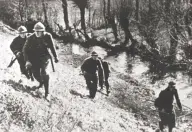
But by mid-September Lwów is besieged, first by the Wehrmacht and then by the Red Army, and the defence needs every available fighter. There Wittek inspects the women's auxiliary military service battalion attached to the Lwów National Defence brigade, commanded by . Wittek must now decide what follows: to keep the ambiguity and let local commanders rule, to hold to doctrine and confine women to the rear, or to accept the transgression and commit her recruits to the fighting.
Wittek decides that the emergency demands a break with official doctrine: 's women's battalion takes part in the defence of Lwów, under her authority, until it is disbanded on 21 September 1939, on the eve of the city's surrender to the Red Army. Wittek leaves Lwów shortly before and slips clandestinely to Warsaw, where in October 1939 she joins the Służba Zwycięstwu Polski (SZP) to organise its women's service, then that of the ZWZ and finally of the . She heads the women's section of the AK (Wydział Wojskowej Służby Kobiet) throughout the war. On the eve of the Warsaw Uprising of 1944, more than 50,000 women are affiliated with the AK: liaison runners (łączniczki), gunners, nurses, sappers. Wittek herself fights in the Uprising. After the war, she is arrested by the communist authorities in 1949, released after 4 months without trial and dismissed from the army. In May 1991, aged 91, she is promoted brigadier general, the first woman general in Polish military history. She dies on 19 April 1997 in Warsaw.
T01-036