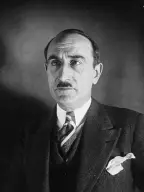
General becomes military governor of Paris on 13 June 1940. Having arrived in the capital on 2 June as deputy to General , he watches Héring withdraw southward with the Army of Paris. At , seat of the military government, he has only meagre means left, while the German vanguards approach from the north.
On 12 June Paris was declared an open city: the capital will not be defended, to spare it the fate of Warsaw in 1939 or of Rotterdam on 14 May. The government has left for Tours, and the exodus has already driven a large share of Parisians onto the roads. The prefect of police, , is staying at his post.
Dentz's mission is an inglorious one: to hand the city over to the enemy the next day, without street fighting or a collapse of public order, while part of the population has stayed and the slightest incident could turn into a tragedy. For an officer, the order has something humiliating about it.
Dentz must decide: stay at to receive the occupier himself, relying on Langeron's police to keep civil order; leave Paris in turn with the last military units, leaving the civil authorities alone to face the Germans; or disobey and defend the Seine bridges.
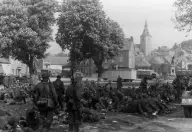
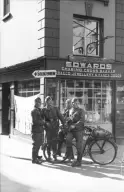
Dentz stays at and hands over the city, with the police keeping civil order. Early on the morning of 14 June the first elements of the enter Paris from the north without meeting resistance. Delegations of German officers present themselves at and at the prefecture of police, where is waiting, and invite the French authorities to place themselves at the disposal of the occupier. No street fighting, no destruction: the open city has spared the capital, at the price of a lasting image of surrender without a fight. After the armistice Dentz commands the 15th military division in Marseille, then becomes high commissioner in the Levant, where in 1941 he will fight the British and the Free French. Sentenced to death in 1945 for intelligence with the enemy, he is pardoned by de Gaulle and dies in prison on 13 December 1945.
T04-016