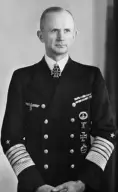
Admiral , Under-Secretary of State and Chief of Staff of the , runs from Rome the , the operational command of the Italian navy. His first task is to keep Libya supplied, where 's and the Italian divisions have just retaken Benghazi.
Without fuel, ammunition and reinforcements brought by sea, the Axis offensive in North Africa dies out. Yet the convoys crossing to Tripoli are harried relentlessly by British submarines, aircraft and ships based on Malta and in Egypt. In January 1942, 2 convoys covered by battleships got through.
But every sortie of the major units is paid for in fuel oil, and Italy is desperately short of it: reserves are so low that the fleet must count each of its movements. Since Cape Matapan, in March 1941, where Admiral lost 3 heavy cruisers, every commitment of the big ships is also weighed in risk.
A new major convoy, made up of 2 groups of merchant ships, is due to sail for Tripoli. Riccardi must decide: commit a battleship and heavy cruisers as cover despite the fuel consumed; send only cruisers and destroyers to save fuel; or leave the major units in port and entrust protection to aircraft.
Riccardi commits the major units. For convoy K7, the sends out the battleship , flagship of Admiral , and a cruiser group formed around the heavy cruisers Gorizia and Trento. The 2 groups of merchant ships reach Tripoli without loss on 23 February 1942, bringing 113 tanks, 575 vehicles and 29,517 tons of supplies. But such protection devours fuel oil that Italy cannot replace. As 1942 wears on, the shortage becomes the decisive factor in Italian naval strategy: the battleships sail only for operations deemed vital, as on 22 March 1942, when leads the Littorio against a British convoy for Malta and is held off by 's smoke screens at the Second Battle of Sirte. The "battle of the convoys" costs the and the Italian merchant navy heavy losses, and Rommel's ends up deprived of the supplies it needs: the fate of the desert war is decided as much on the sea lanes as in the sands.




T10-107