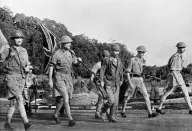
On 22 February 1942, learns that , without waiting for Canberra's consent, has turned northward the convoy bringing the 7th Division of the home from the Middle East, so as to land it at rather than in Australia. The 6th Division follows behind. fell on 15 February: 15,000 Australians are now prisoners of the Japanese, and was bombed on the 19th.
For 3 days London has been pressing Canberra to lend this leading division, the only one able to reach in time. has backed the request and promised to reinforce Australia. Curtin has already refused once. Churchill now presents him with a fait accompli: lightly escorted transports are steaming toward a city the Japanese threaten to encircle.
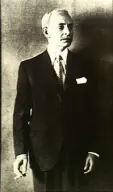
Behind the military decision lies a political rupture. In December 1941, Curtin had publicly declared that Australia now looked to America, free of any inhibitions. This diversion is the first real test of that line.
Curtin must decide: demand that the convoy turn back and that both divisions come home to defend Australia, even at the cost of confronting Churchill and Roosevelt alike; accept the diversion and commit the 7th Division to the campaign; or lend the division to for only a few weeks, in return for a firm undertaking to relieve it and bring it home.
Curtin held firm. In his cable of 23 February he laid on Churchill the responsibility for anything that might befall the convoy; London gave way at once, and the transports, after a refuelling stop at Colombo, sailed on to Australia, where the 7th Division landed in March 1942. On 3 March Curtin agreed to a limited gesture: 2 brigades of the 6th Division, the 16th and 17th, garrisoned from March to August 1942 before returning home in turn. fell on 8 March. The 7th Division would be committed to the Track in New Guinea from August. The episode marked Australia's strategic pivot toward Washington: Canberra would no longer let London impose imperial sacrifices on its forces.
T10-029