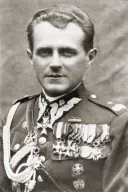
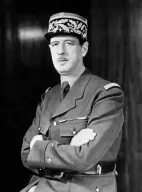
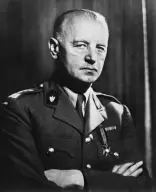
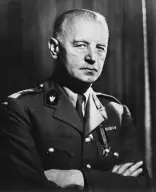
, 53, is one of Poland's leading generals: a companion of Piłsudski in the Legions and a former Minister of Military Affairs, he commanded the in September 1939. After the defeat, he reached France via Hungary in October. He is a minister without portfolio in General 's government, and President has designated him as his successor.
On 8 November 1939, Sosnkowski takes the chair of the Committee of Ministers for Home Affairs, responsible for occupied Poland. In Warsaw, as early as 27 September, before the government-in-exile even existed, General founded the (SZP), an underground organisation that has since acquired a political council of the main parties.
In Paris, Sikorski and Sosnkowski, political opposites in every way, share one concern: a resistance born without them, with its own political alliances, could slip out of the legal government's control. The struggle must also be directed under 2 occupations, German and Soviet, through couriers crossing Europe.
Sosnkowski must propose the status of the armed resistance: dissolve the SZP in favour of a purely military organisation, commanded from Paris and subordinate to the government; recognise the SZP as it has formed, with its political bodies, setting it only broad guidelines; or let a clandestine authority separate from the government-in-exile emerge in Poland.
Sosnkowski and Sikorski choose to dissolve the SZP in favour of a purely military organisation subordinate to the government: on 13 November 1939 the (ZWZ, Union of Armed Struggle) is born, with Sosnkowski as its commander-in-chief, from Paris, under the pseudonym “Józef Godziemba”. The instruction of 4 December 1939 makes it a national organisation, above parties and classes. Colonel commands the German occupation zone from Warsaw; Karaszewicz-Tokarzewski, sent to the Soviet zone, is arrested by the NKVD. Direction from France soon runs up against slow communications, and after the fall of France, Rowecki takes command inside Poland itself on 30 June 1940. A civilian branch, the Government Delegation, takes shape from late 1940 under , and the ZWZ becomes the on 14 February 1942. Commander-in-chief of the Polish Armed Forces after Sikorski's death in July 1943, Sosnkowski disapproves of launching the Warsaw Uprising; he is removed from his post on 30 September 1944 under pressure from Churchill. He refuses to return to communist Poland and dies on 11 October 1969 in Arundel, Quebec.
T01-077