A Soviet kolkhoznik on a collective farm in Ukraine watches, in the autumn of 1941, the front line draw nearer to his village, where the German army is advancing. He has spent his life on this kolkhoz and knows every silo, every head of livestock entrusted to the collective.
Forcibly collectivized in the 1930s, often at the cost of famine, he keeps a bitter memory of the regime yet also dreads the occupier. His family depends on this year's harvest, already gathered in or still standing.
On 3 July 1941, over the radio, proclaimed the policy of scorched earth: in any withdrawal, the enemy was to be left "not a single locomotive, not a single railway car, not a kilogram of grain, not a liter of fuel." Local authorities pass down the order to destroy crops and installations, to evacuate or slaughter the livestock, and to organize resistance behind the lines.
The Germans are a few days' march away. The kolkhoznik must decide the fate of his farm: burn the crops and buildings as the order demands, bury grain and spirit away animals to feed his own, or take the road east driving the collective herd.
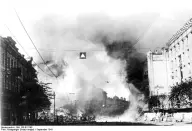
Across much of the Ukrainian countryside the order was carried out: harvests, farms and equipment were burned or put out of action so as to leave nothing to the enemy. Application was nonetheless highly uneven: where the Party and the NKVD oversaw the evacuation, millions of head of livestock, grain stocks and industrial equipment went east; elsewhere, the lightning German advance of summer 1941 outran the orders, and many peasants hid food or left it intact. The directive worsened shortages in the occupied zones and fed the famine of that winter. The Germans in turn requisitioned the countryside and carried out murderous reprisals against villages suspected of helping the partisans, whose ranks swelled in the devastated regions. Historians estimate that several million Soviet civilians died of hunger and violence in occupied territory, without being able to determine precisely how much was attributable to scorched earth itself.
T09-062