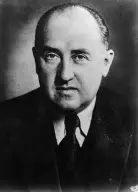
, 56, Taoiseach (Prime Minister) of Eire, must set Ireland's stance on the morrow of the invasion of Poland. A veteran of the 1916 Easter Rising and of the War of Independence, he had a Constitution adopted in 1937 that makes Ireland a fully sovereign state, a mere "external associate" of the British Commonwealth.
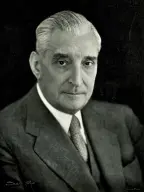
His foreign policy turns on 2 questions: Northern Ireland, which has remained British since the partition of 1921, and neutrality, an assertion of sovereignty against London. In 1938, the Chamberlain-de Valera agreement returned to Ireland the (Berehaven, Cobh, Lough Swilly), until then held by the ; , then a mere MP, denounced a handover that would deprive the fleet of Atlantic bases.
On 2 September 1939, de Valera addresses the . Britain is about to declare war on Germany, and the dominions of the Commonwealth will follow in the coming days. Irish opinion is divided: the IRA and the hardest nationalists are hostile to London, while part of the business community would welcome closer ties with Britain.
De Valera must choose the stance to announce: enter the war alongside the United Kingdom, like the dominions; proclaim a neutrality openly benevolent towards London, offering the the use of the ; or declare a strict neutrality, closed to every belligerent.
De Valera announces to the , on 2 September 1939, a strict neutrality: Eire will take no part in the war and will open its ports to no belligerent. The same day the Dáil adopts the constitutional amendment that allows a neutral state to use emergency powers, and neutrality there commands a very broad consensus. British requests for access to the would be refused throughout the war, lengthening the routes of Allied escorts in the Battle of the Atlantic. In practice, the neutrality of "the Emergency" leans discreetly towards London: weather reports passed to the Allies, Allied airmen who came down in Ireland often returned without publicity while the Germans were interned, intelligence exchanged through the G2 service of Commandant . In June 1940, de Valera turns down a British offer linking Irish unity to Ireland's entry into the war. On 2 May 1945, he offers his condolences to the German minister on Hitler's death, a protocol gesture that lastingly tarnished Ireland's image; Churchill would lash out at Irish neutrality in his victory speech of May 1945. Neutrality nonetheless preserved the country's sovereignty and spared it the war. De Valera went on to dominate Irish political life, Taoiseach several times until 1959, then president until 1973; he died in 1975.
T01-052