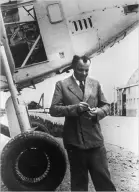
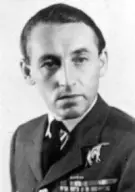
, 25, comes from a military family (his brother is an infantry officer, a company commander at Kollaa). A fighter pilot since 1935, he serves in (Squadron 24), equipped with the Fokker D.XXI — a 1936 Dutch fighter, 460 km/h, 4 machine guns, fixed undercarriage.
Facing him: the Red Air Force — some 3,250 Soviet aircraft (Polikarpov I-15, I-16, I-153, Tupolev SB-2 and Ilyushin DB-3 bombers) against 114 Finnish fighters in all. Ratio of 30 to 1. But the Finnish pilots are better trained, and they are guided by a ground observer network that reports approaching enemy formations.
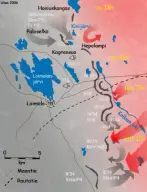
From 19 December 1939 to 13 March 1940 (85 days) Juutilainen patrols over Karelia and the Baltic. He operates singly or as a pair against Soviet formations of 8 to 12 aircraft.
He must choose his air-combat tactics in the face of Soviet numerical superiority.
Juutilainen adopts offensive tactics — aggressive patrolling and attacking formations that outnumber him. Winter War score: 2 individual kills and 1 shared (on the obsolete Fokker D.XXI). But it is during the Continuation War 1941-1944 that he becomes Finland's top ace and the most successful non-German ace of the conflict: 94 confirmed kills (34 on the Brewster B-239 Buffalo and 58 on the Messerschmitt Bf 109G). Twice decorated with the Mannerheim Cross (one of only 4 men to receive it twice), he came through unscathed (never hit by an enemy fighter in 437 combat sorties). He left the air force in 1947 and flew as a professional pilot until 1956. He died in 1999, on his 85th birthday. His brother also survived, becoming one of the heroes of Kollaa.
T02-019