Answering the Admiralty's call of 27 May 1940, more than 700 civilian small craft came forward to take part in Dynamo. The list was a motley one: yachts from Henley-on-Thames, Thames paddle steamers (PS Medway Queen, PS Princess Elizabeth), Cinque Ports fishing boats, Dutch coasters that had escaped after the invasion of 10 May, motor launches of the Royal National Lifeboat Institution (RNLI), a motorboat from the Margate station.
Many of these boats belong to pleasure sailors. The owner of a weekend yacht learns on 27 May that the Admiralty is gathering small craft at Tilbury and Sheerness. He goes there that afternoon. His civilian life turns upside down.
At Tilbury, he is asked to choose: hand his boat over to the Royal Navy, or pilot it himself to Dunkirk, under Luftwaffe bombing and German coastal artillery.
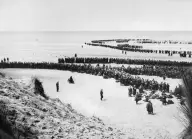
Most owners handed their boats over to the Royal Navy: the small craft were crewed by naval officers and ratings and by experienced volunteers, and very few owners, apart from fishermen and a handful of others, sailed their own vessels. Some boats were even requisitioned before their owners could be contacted. Among the exceptions was , a former officer who had survived the Titanic (1912), aged 66, who brought 127 soldiers back to Ramsgate aboard his yacht Sundowner, with his son Roger and a young Sea Scout. In all, Operation Dynamo evacuated 338,226 soldiers, tens of thousands of them carried or ferried out by the small craft. Since 1965 the Little Ships have organised a commemorative return to Dunkirk every 5 years. The expression "the Spirit of Dunkirk" entered popular British vocabulary to describe spontaneous civilian mobilisation in the face of adversity. The surviving boats are recorded today by the Association of Dunkirk Little Ships (ADLS).




T03-031