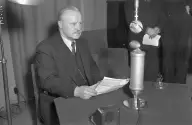
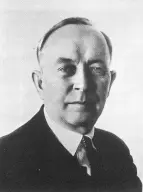
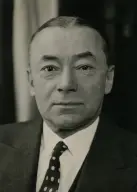
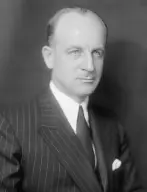
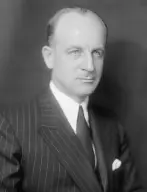
, Finnish Prime Minister, arrives in Moscow on 7 March 1940 with his delegation — , , — for the final negotiations of the Winter War. The fighting has dragged on for over 3 months.
Soviet terms harden by the hour, fuelled by the Lähde breakthrough and the imminent capture of Vyborg. On 11 March, Molotov tables his definitive version: cession of the Karelian Isthmus, of Vyborg, Sortavala, the northern shores of Lake Ladoga, the Salla-Kuusamo lands, and a 30-year lease on Hanko. Total: 35,000 km² (11% of the territory), 422,000 refugees to evacuate.
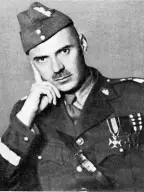
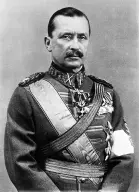
Ryti consults Helsinki by telephone. Marshal Mannerheim confirms that the army cannot hold another 15 days. President Kallio and Mannerheim agree: it must be signed. It remains for Ryti to define the form of the signature and the public Finnish posture.
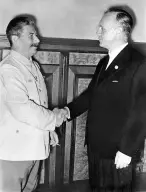
The session is set for 23:00 on 12 March. The delegation enters the Kremlin chamber not knowing whether Moscow will demand, at the last moment, a secret protocol comparable to that of the Nazi-Soviet Pact.
Ryti signs the treaty together with a public declaration affirming that Finland remains free and independent. At 23:00 on 12 March, the peace treaty is signed; no secret protocol is annexed. The Finnish communiqué declares: "Finland retains her independence, her regime, her honour." Peace takes effect on 13 March at 11:00 (Helsinki time). Casualties: 25,904 Finnish dead, 131,476 Soviet dead (post-1991 figures). Finland survives as an independent state — a unique phenomenon in central and eastern Europe 1939-1945. Mannerheim returns to Helsinki on 14 March, cheered by 200,000 people. Tanner argues for a rapprochement with Sweden and Britain; Ryti, for a German rapprochement that will take shape in the Continuation War (June 1941). Ryti becomes President of the Republic in December 1940. The Moscow Peace remains for Finland both a trauma and a myth of resilience — the Talvisotahenki ("Winter War spirit").
T03-001