On 16 January 1942, a month after Pearl Harbor, Roosevelt created the War Production Board by executive order, succeeding the Office of Production Management. It received broad powers over the allocation of raw materials, the conversion of factories, and the priority of military orders.
To head it, the President appointed , a former executive at Sears, Roebuck and Company. A trusted figure within the administration, he wielded considerable authority but had to contend with the armed services, industrialists, and rival agencies.
The first major point of tension concerned how ambitious the production targets set for 1942 and 1943 should be. Should he aim for maximalist figures, follow the estimates the WPB's economists deemed realistic, or let the market and contracts decide?
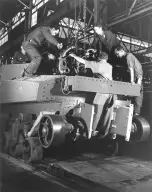
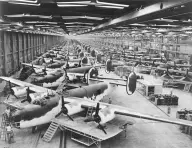
Nelson ultimately brought the targets down to actual capacity and rationed strategic materials. In January 1942 Roosevelt had set spectacular goals (60,000 aircraft and 45,000 tanks for the year), and the Army's procurement services were placing orders out of all proportion to resources. In autumn 1942, during the "feasibility dispute," WPB economists Robert Nathan and Simon Kuznets demonstrated that the military program exceeded available raw materials and labor; over the objections of General Brehon Somervell, Nelson came round to their findings, which the WPB upheld, and on 2 November 1942 announced the Controlled Materials Plan, which allocated steel, copper, and aluminum across the programs. This compromise avoided waste and enabled American industry to produce nearly 185 billion dollars' worth of armaments from 1942 to 1945.


T10-003