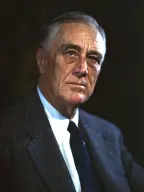
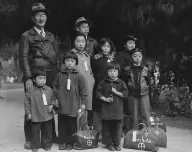
A Japanese American head of household has farmed a truck-garden plot in County, in 's Central Valley, for years. Like thousands of his neighbours, he is a U.S. citizen or a long-time resident; his children were born in the United States. On 19 February 1942 President signed Executive Order 9066, authorising the army to designate exclusion zones and to remove from them anyone it deems suspect.
Since late March, exclusion orders have followed one another along the West Coast, and camps are opening inland, such as , to be run by a federal agency, the . On 4 May the Western Defense Command announces that families of Japanese ancestry in western County must leave by 13 May for the assembly center.
Each family will be allowed only what it can carry; the rest — land, crop, equipment, furniture — must be liquidated within days. No one knows how long they will be gone.
The head of household weighs 3 paths: comply with the order and sell off the farm and equipment in a panic; refuse to leave and challenge in court a removal that strikes citizens without trial or charge; or entrust the property to a trusted neighbour, betting on a return.
With no recourse and under the pressure of deadlines, the vast majority of families complied and sold at a loss or abandoned their property; from the center they were later moved to camps. The few who defied the orders, such as , were arrested and convicted, and the Supreme Court upheld the exclusion in 1944. Nearly 120,000 people of Japanese ancestry were interned, about two-thirds of them U.S. citizens. Material losses were massive: farms, businesses, homes and savings dispersed for a fraction of their value. Many who had entrusted their belongings to neighbours found nothing on their return. The injustice was officially acknowledged decades later: the of 1988 apologised on behalf of the United States and granted redress to the survivors.


T10-092